Vacanze
A guest guide for vacation rentals
Problem
Every vacation rental comes with the same list of things guests need to know: the Wi-Fi password, house rules, trash day, where to get coffee, and which beach is actually worth visiting. That information usually ends up in a printed binder, a long email, or a few notes left around the house. It works, but it is a pain to update and not very useful once the guest leaves the property.
My family owns a vacation rental, and I had stayed in plenty of others, so I kept running into this problem from both sides. Vacanze was my attempt to make the whole thing easier.
Role
I founded Vacanze and built the entire product myself, including the frontend, backend, database, payments, hosting, domain, and marketing site.
Approach
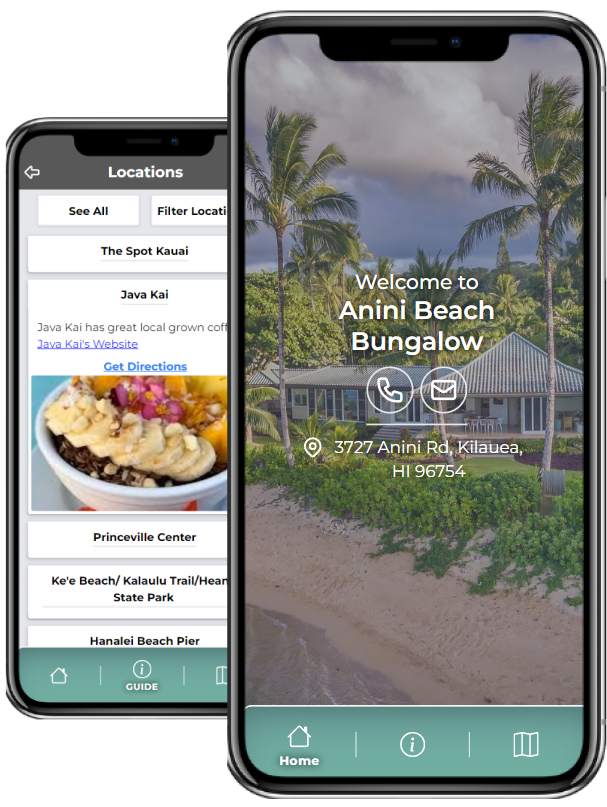
Hosts could create a guide for each property and send it to guests with a link or QR code. I kept the guest side simple: open the link on a phone and everything is there, with no account required. Hosts had to sign in to create or edit a guide, and they could only manage properties attached to their account.
Each guide had three main parts: a map of places recommended by the host, a chat between the host and guest, and information pages for things like check-in instructions, house rules, and property details.
Stripe was probably the hardest part. I needed subscriptions that supported one property on the basic plan and multiple properties on the larger plan. Stripe's examples did not cover the exact setup I needed, so I had to piece it together from the lower-level parts of their API.
The PWA setup also took much longer than expected. Getting the splash screen, app icons, and install flow to work consistently across iOS, Android, and desktop took weeks of testing and small fixes.
The Google Maps feature looked straightforward at first, but it had a lot of small details. Hosts entered an address, the app geocoded it through Google's API, and the map displayed a custom pin based on the category. A restaurant pin looked different from a beach pin, for example.
I spent about eight to ten months building the first version, then moved into maintenance and smaller improvements.
Outcome
Three paying clients ran 15–20 vacation rentals on the platform at a few dollars a month each. The product covered its own hosting costs. I wound it down to focus on Revmatics and MortarStack.
What I'd Change
I built too much before doing enough customer research. If I started Vacanze today, I would talk to hosts and test the idea with a landing page before writing much code. Then I would build the smallest version someone was willing to pay for and grow it from there.
Since then, I have spent a lot more time on sales calls, demos, customer onboarding, and working through product decisions with other people. Vacanze would have gone to market very differently if I had that experience when I started it.
Stack
React, Tailwind, Node.js, Express, GraphQL, MongoDB, Redux, Stripe, Google Maps API, Heroku, GoDaddy.